Laboratory Mixers
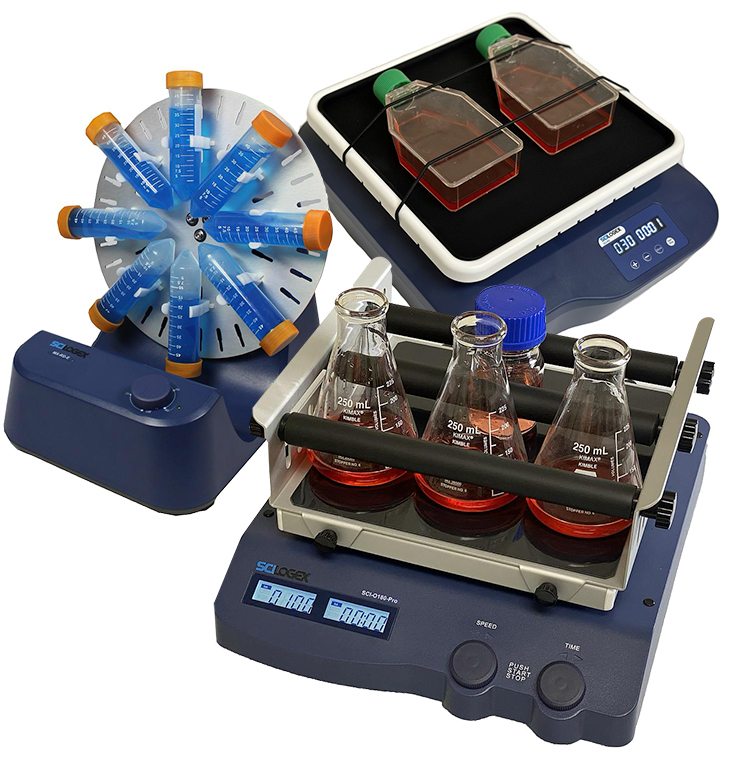
Every type of lab mixer you’ll ever need, curated for your convenience in one spot.
Building or updating your lab is an exercise in patience. You can waste a lot of time (and consume a lot of patience) if your provider doesn’t have everything you need.
The collection of laboratory mixers below contains everything you need to agitate:
- Flasks
- Beakers
- Tubes
- Bottles
- Petri Dishes
- Microplates
- Your colleagues (just kidding!)
Find what you need here or contact us with your application and we’ll do the legwork for you.
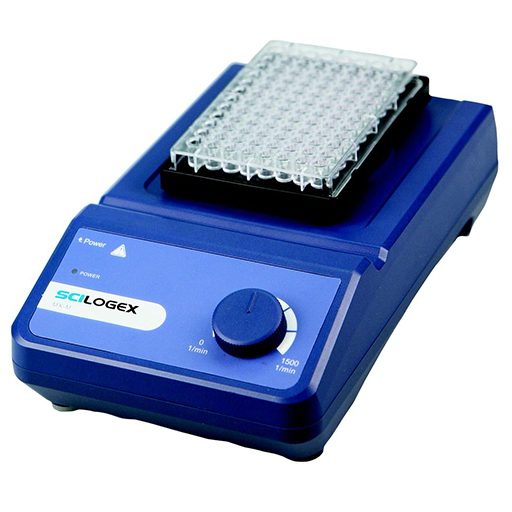
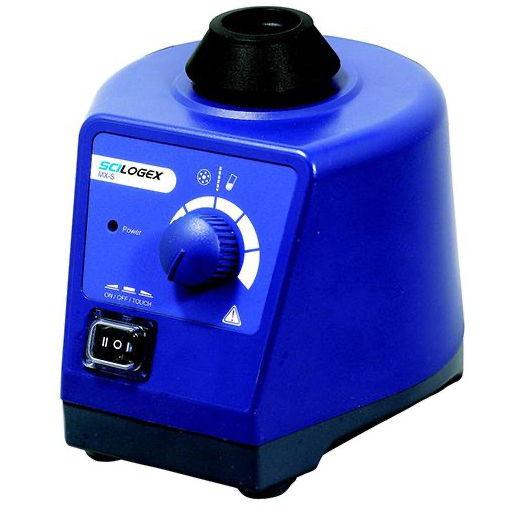
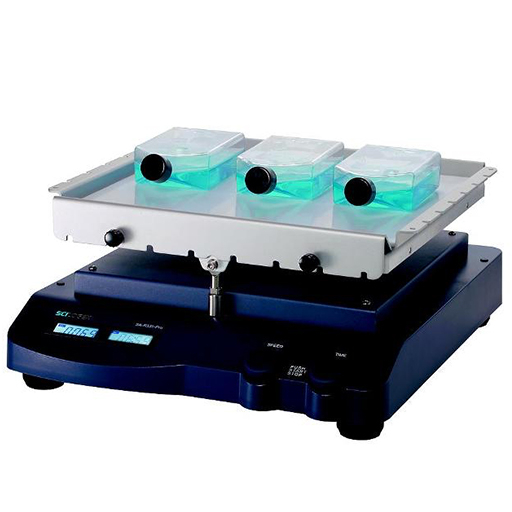
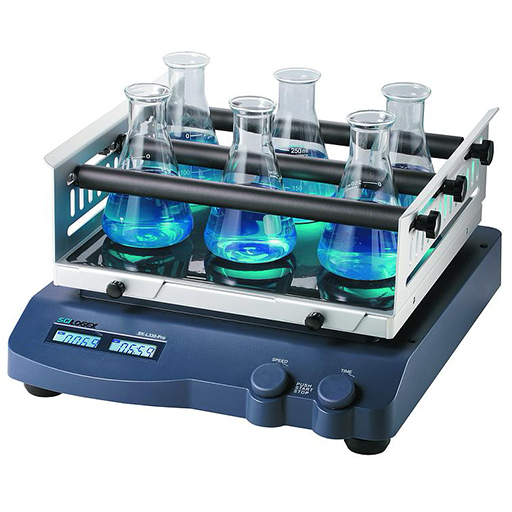
Thermal Mixers
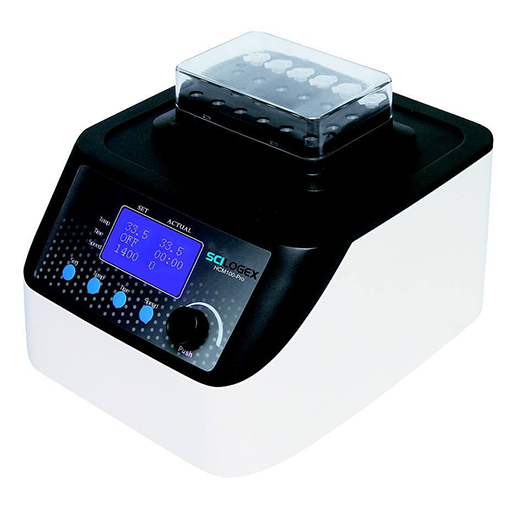
- For heating, cooling, and mixing plates and tubes in gene synthesis and simila rapplications.
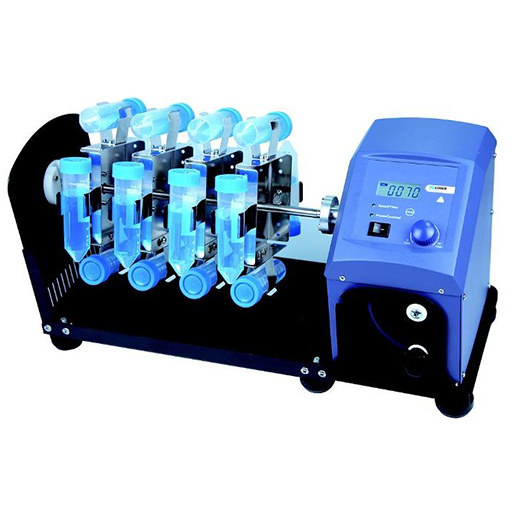
What type of vessel will you use with your laboratory mixers?
If you work with slides, petri dishes, or trays, you can choose a suitable rocker at the link above.
For most flasks (except cell culture flasks), beakers, test tubes, and bottles, Scilogex shakers are reliable and long-lasting.
How do different lab mixers work?
Different laboratory mixer, different application, different motion.
Here’s what each type of lab mixer does.
See-saw Rocker

3D Rocker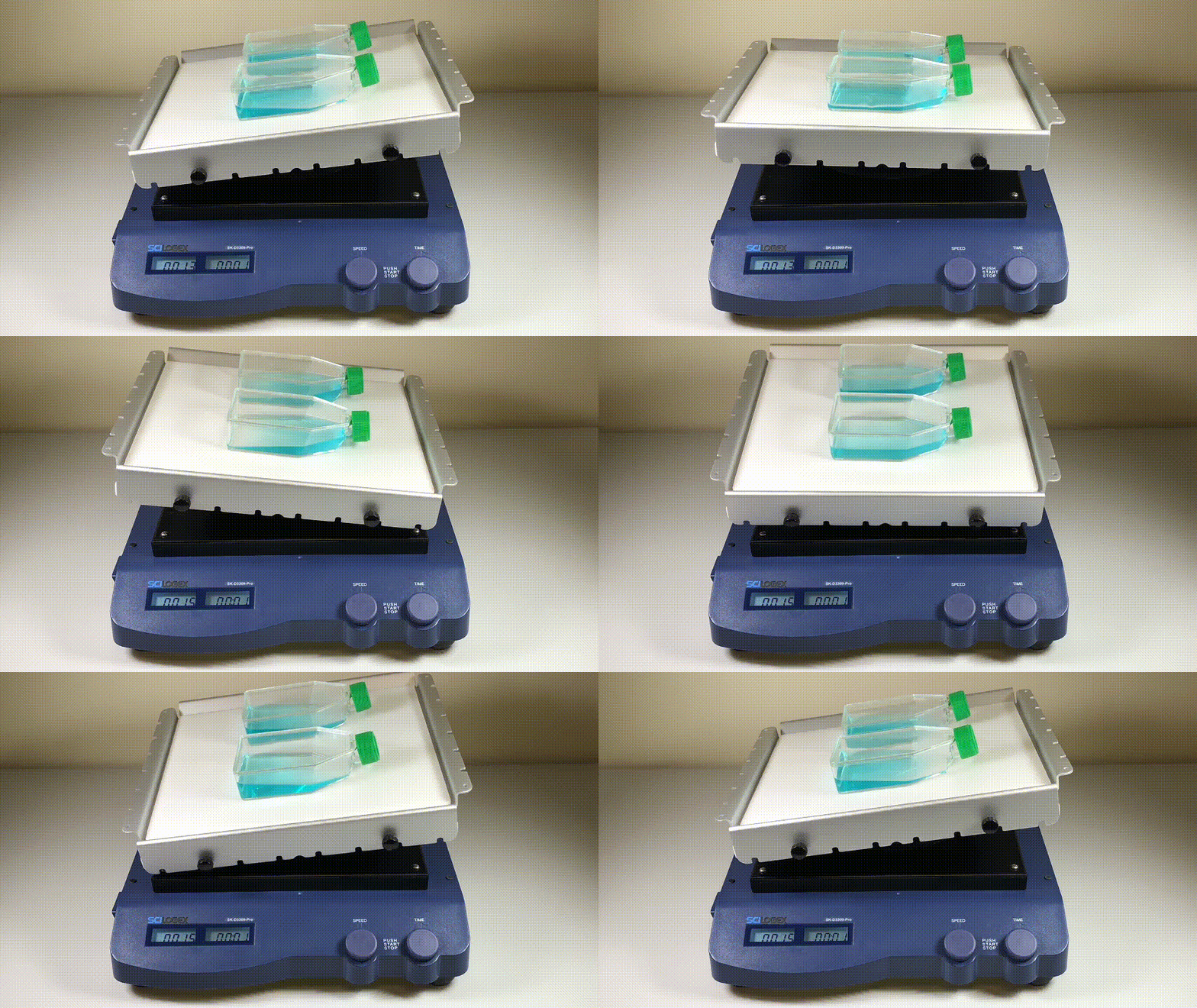
Linear Shaker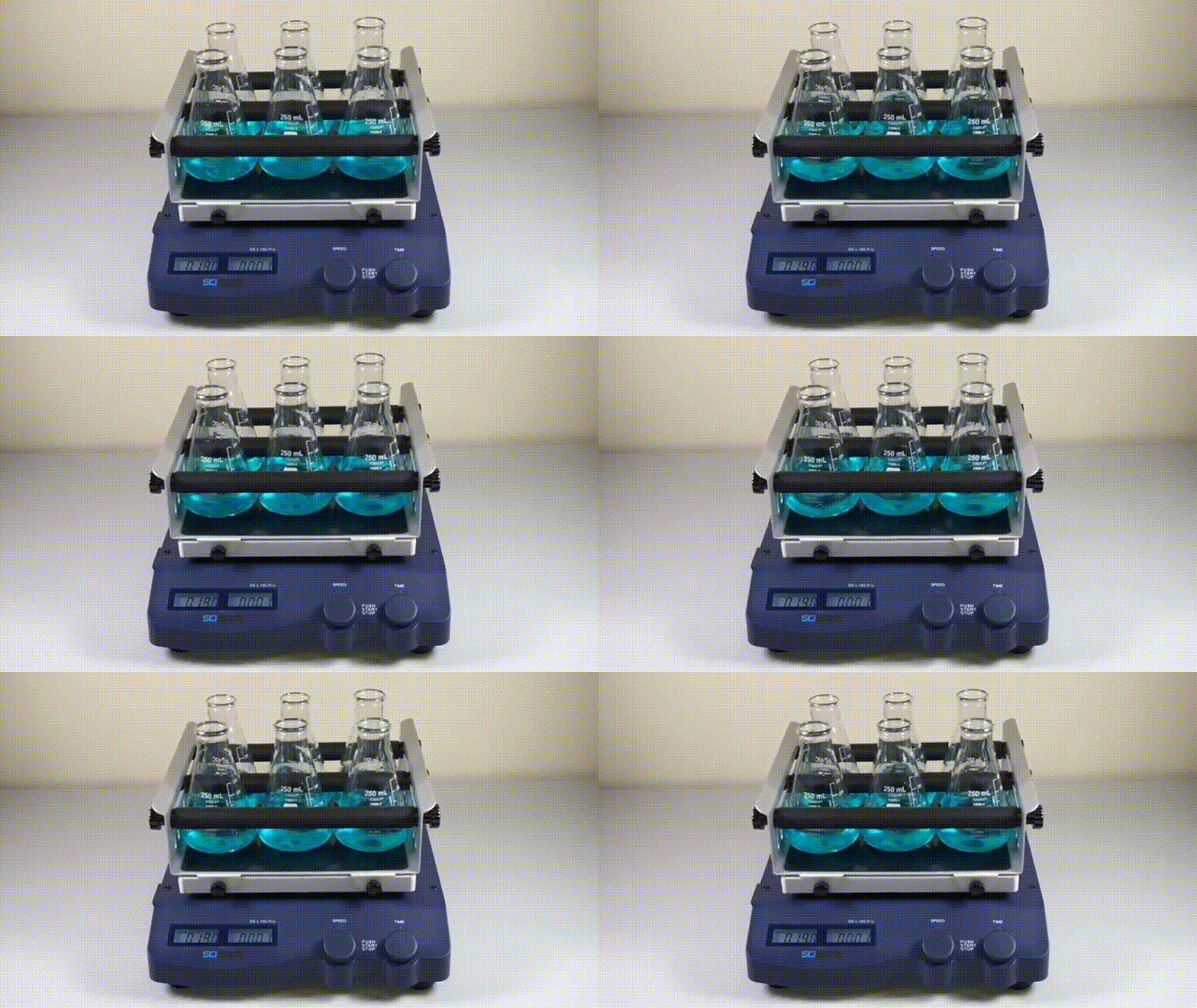
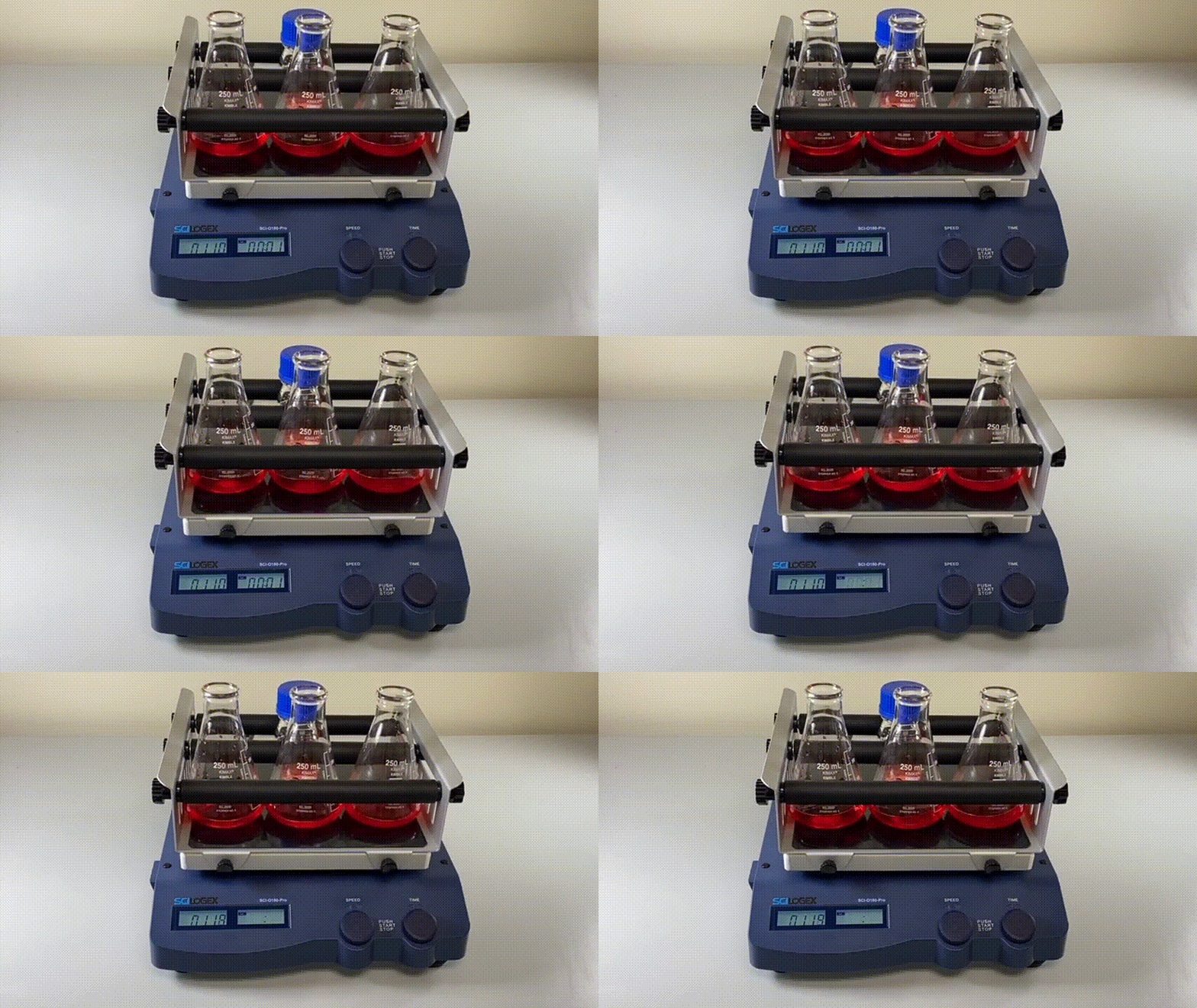
Orbital Shaker
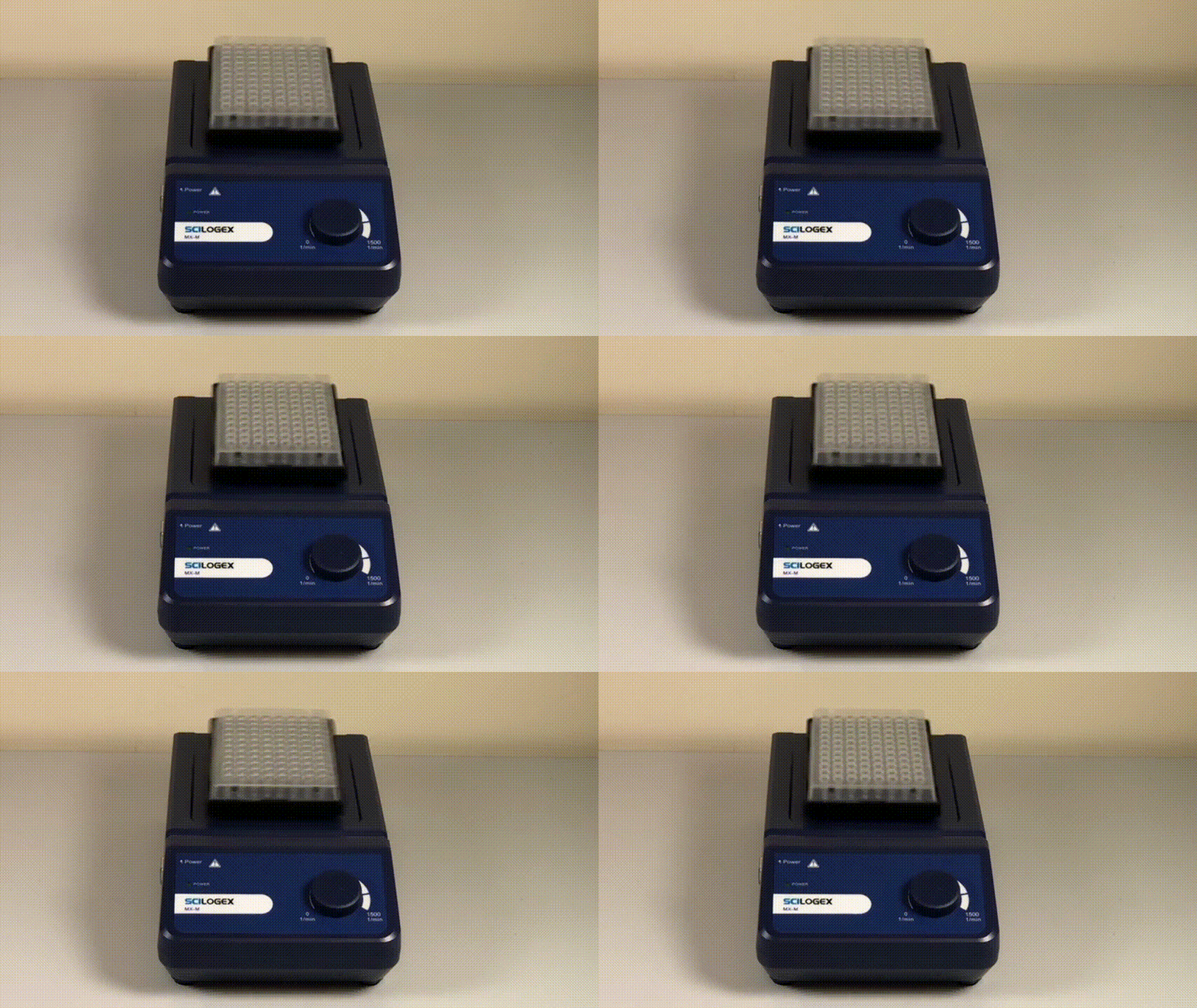
Microplate Mixer
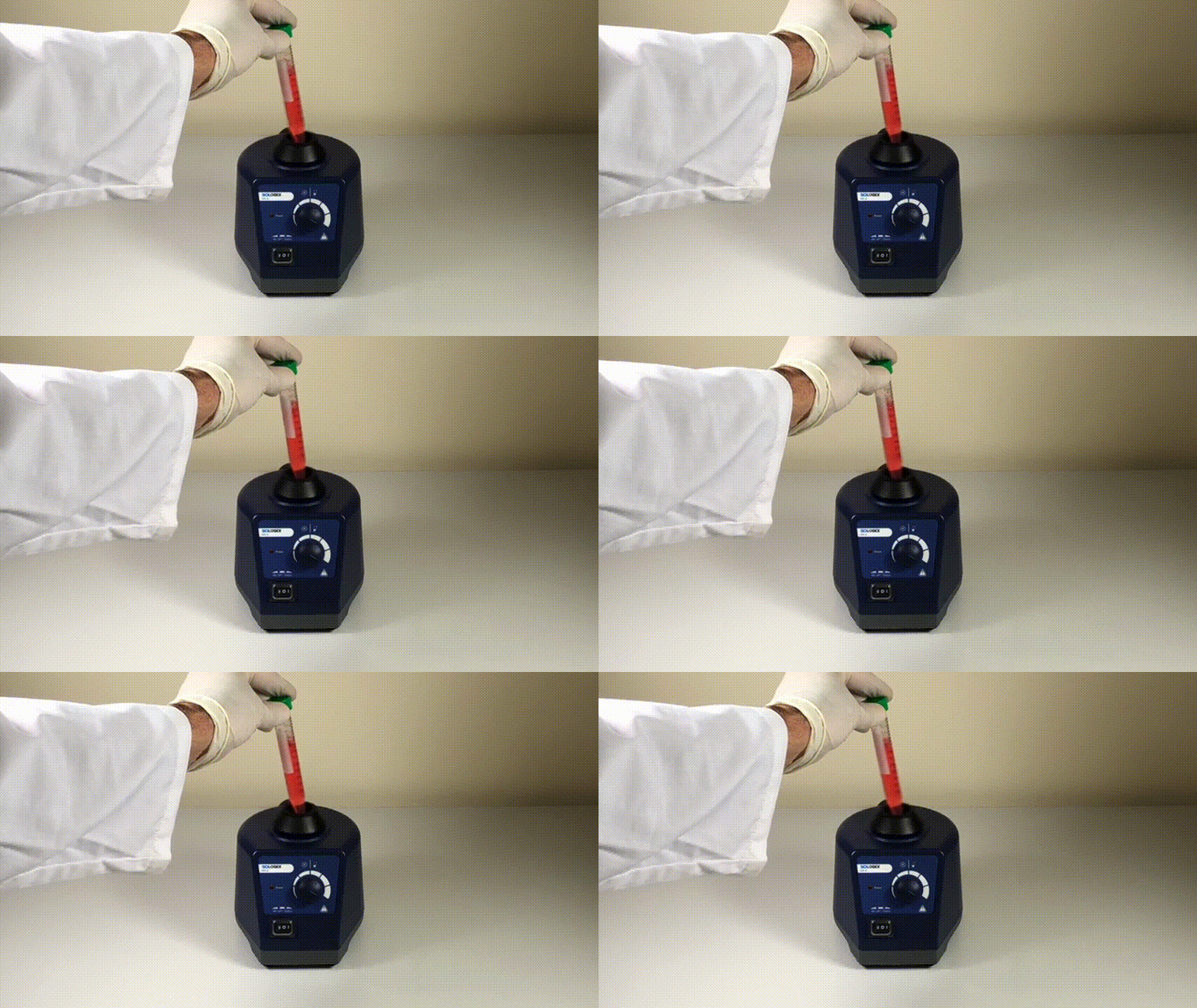
Rotisserie Tube Rotator
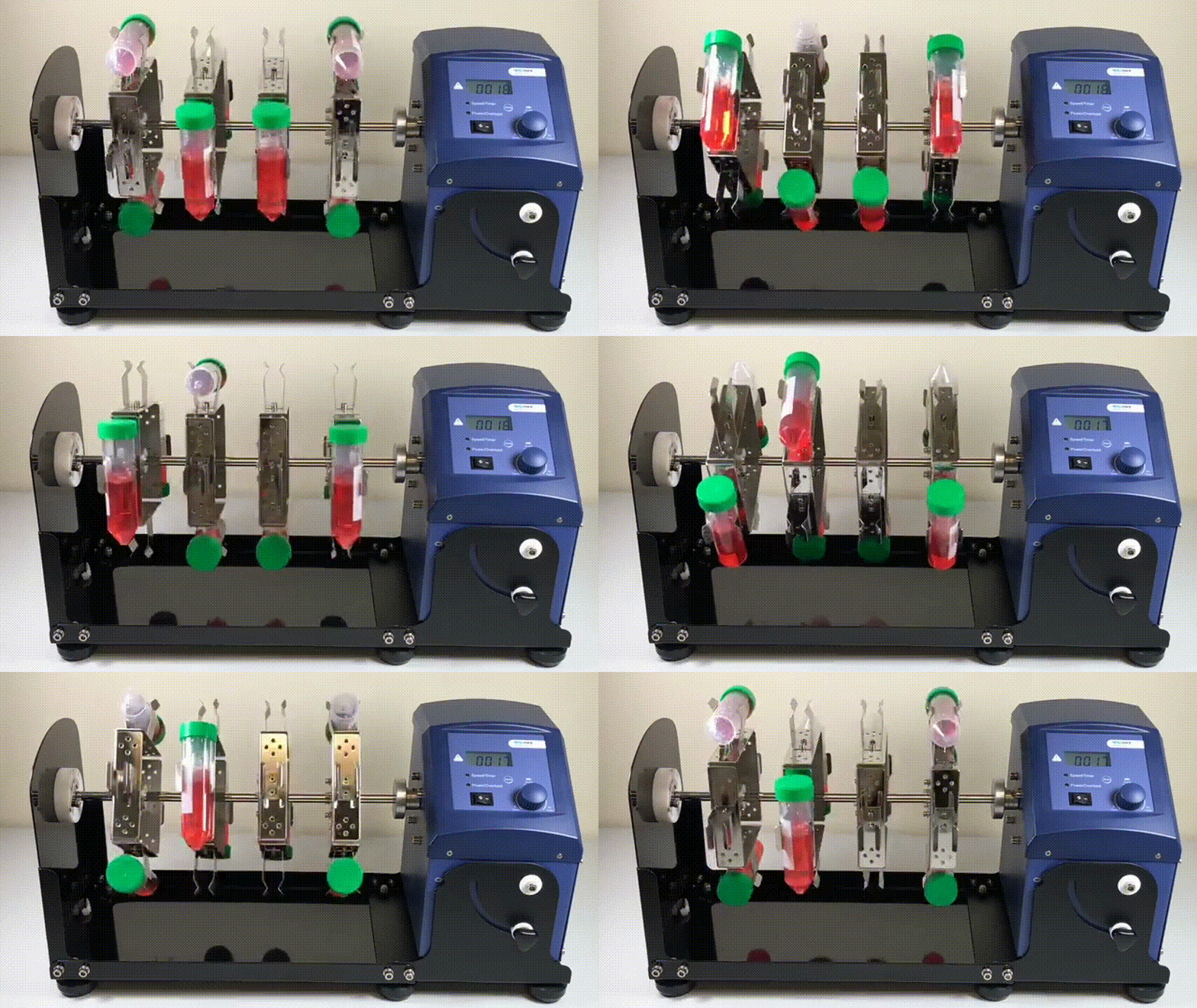
Disk Tube Rotator
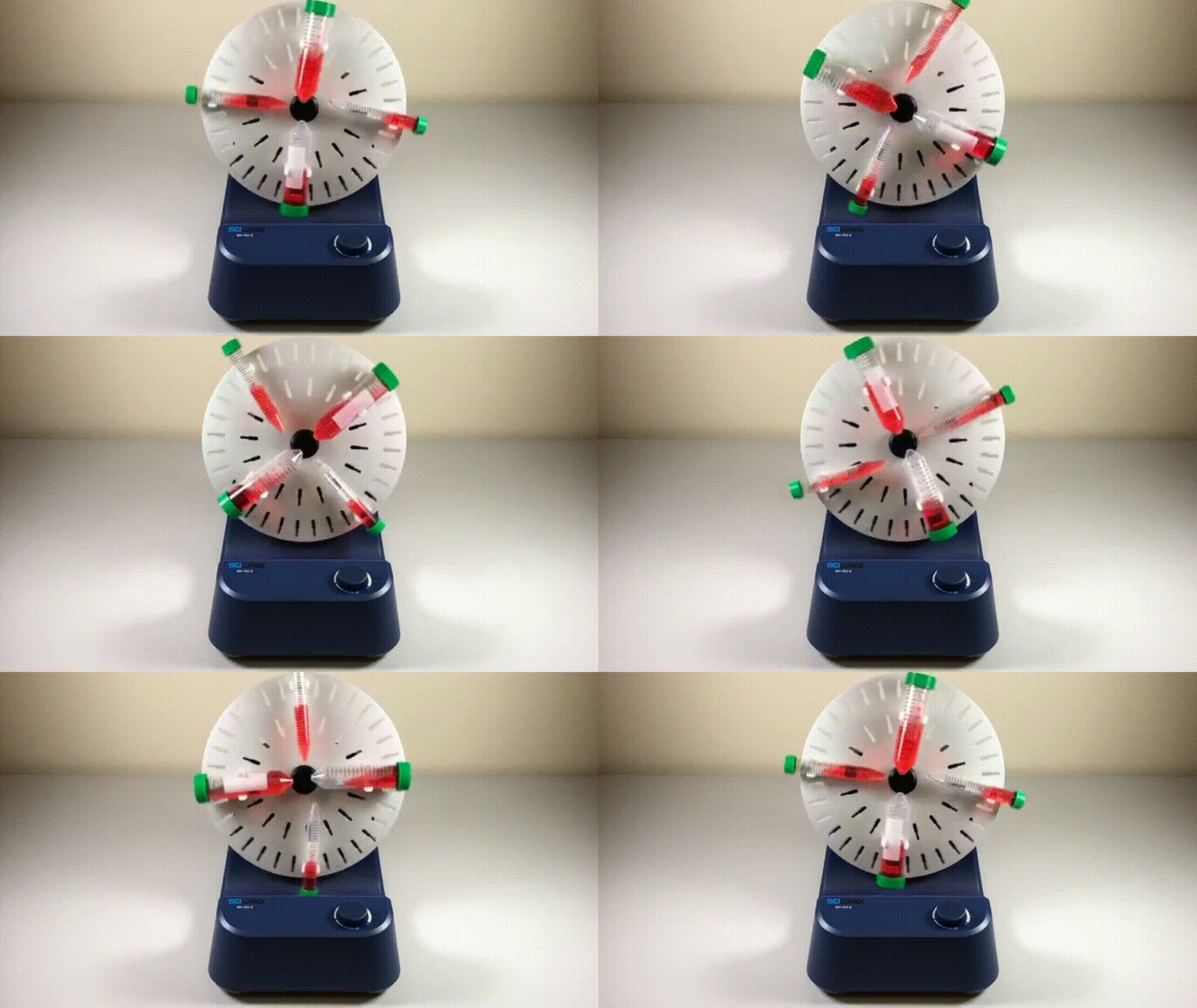
Tube Roller
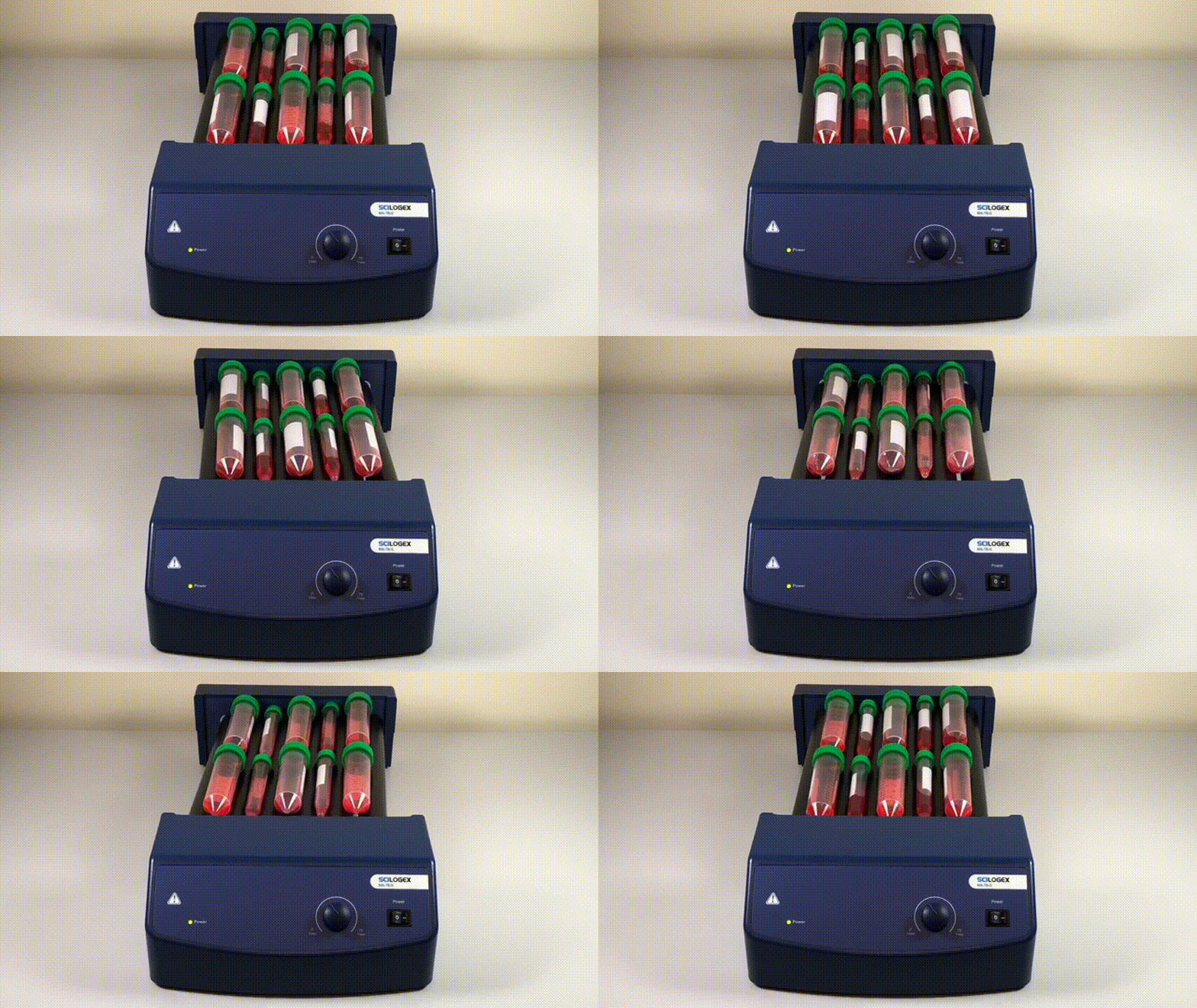
Where are Scilogex benchtop lab mixers used?
Scilogex laboratory mixers are built to be:
- Long-lasting and reliable.
- Budget conscious.
- Easy for inexperienced users.
So you commonly find them in clinical labs, industrial labs, high-schools, cannabis labs, universities.
Anywhere lab managers keep close tabs on their expenses and succeed in the administrative parts of their jobs, you find our lab mixers.
Learn more about the laboratory mixers you need below.

10x10, 30L, up to 500°C. The Hotplate Stirrer you need.

Save time, Save money, and save valuable chemicals. It's genie-us.

Trade in your old pipettes today for a major discount toward the new Superpette.
Do you have any product inquiries or other concerns?
Let us know or ask anything by filling out the form below. One of our laboratory equipment experts will get back to you within 24 hours
For more information please
call +1 (860) 436-9221
or email us at [email protected]
Why Buy From SCILOGEX?

Scilogex only guarantees quality and excellence. Serving laboratories for all areas of research for many years already, we offer a wide range of innovative benchtop equipment designed to meet requirements and budget of virtually any laboratory. Operate at your highest level of efficiency with our advanced line of liquid handling and laboratory products manufactured by our partners in ISO90001 facilities and are UL approved with cTUVus and cSAus certifications.
Always customer-focused, we make sure our patrons are given the best deals, warranties, and customer service in the market. Trust our laboratory experts to provide not just exceptional pre-purchase support but also unparalleled product recommendations.
View our 2027 Product Catalog
Get our complete and latest product portfolio for free.
Earn Rewards
Enjoy exclusive deals & discounts on our lab equipment & supplies.
Download Scilogex Literature
Find a collection of product manuals and brochure PDFs available for download.