for your organization today
Explore our comprehensive range of Dewar flasks and Dry Ice Makers for all your cryogenic needs.
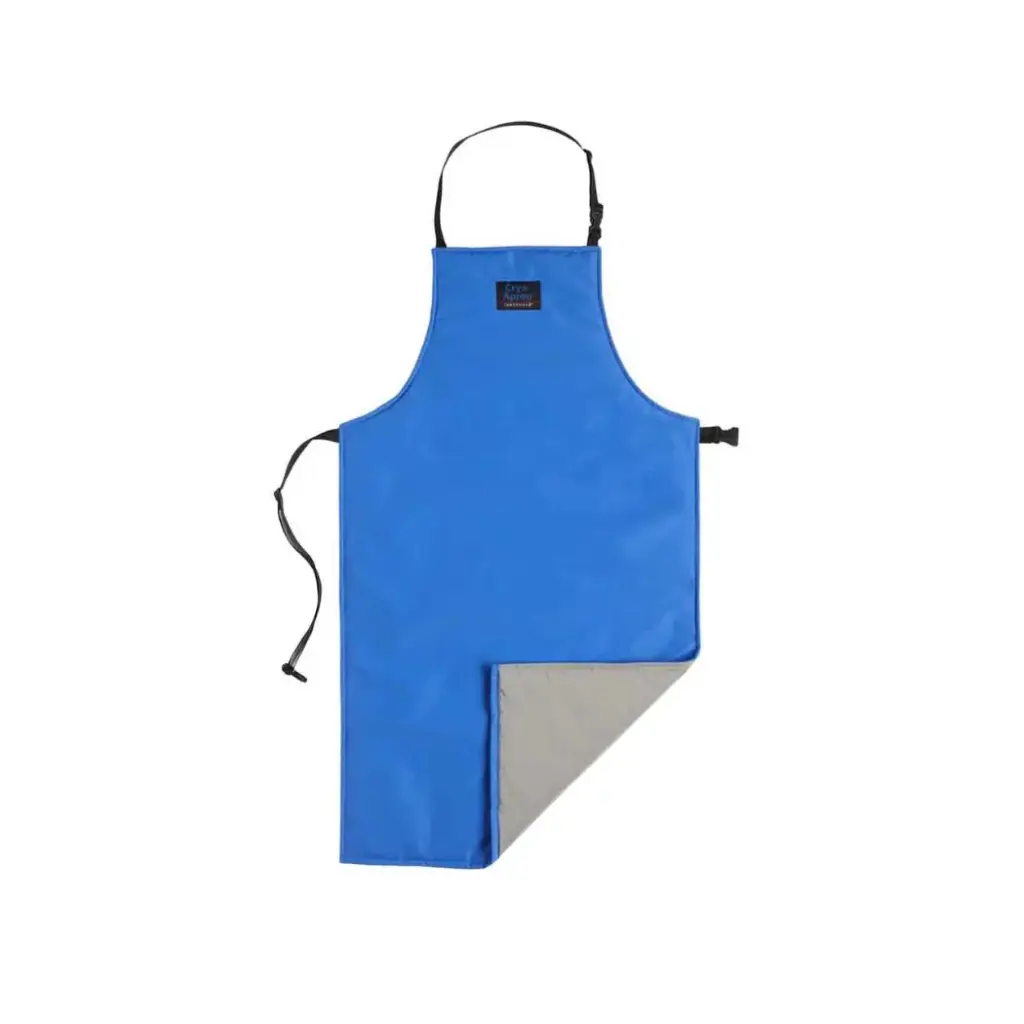
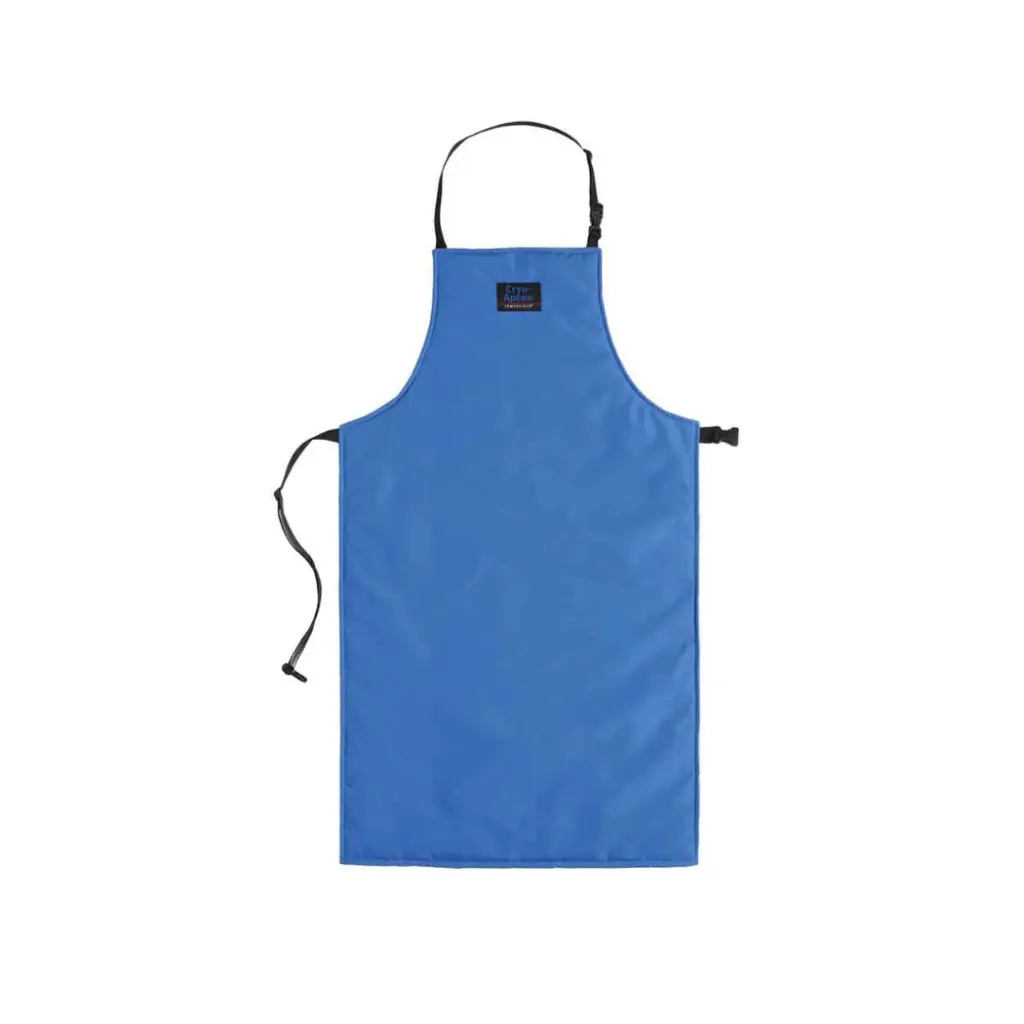
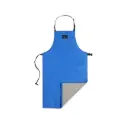
Liquid nitrogen at -196°C doesn't give you a second chance. The Tempshield CRYO-APRON® is certified cryogenic protection for your torso and upper legs, available in four lengths from $273.
CE Cat. III certified to EN 511, EN 388, and EN ISO 13688
The highest EU PPE classification - for hazards that can cause irreversible injury
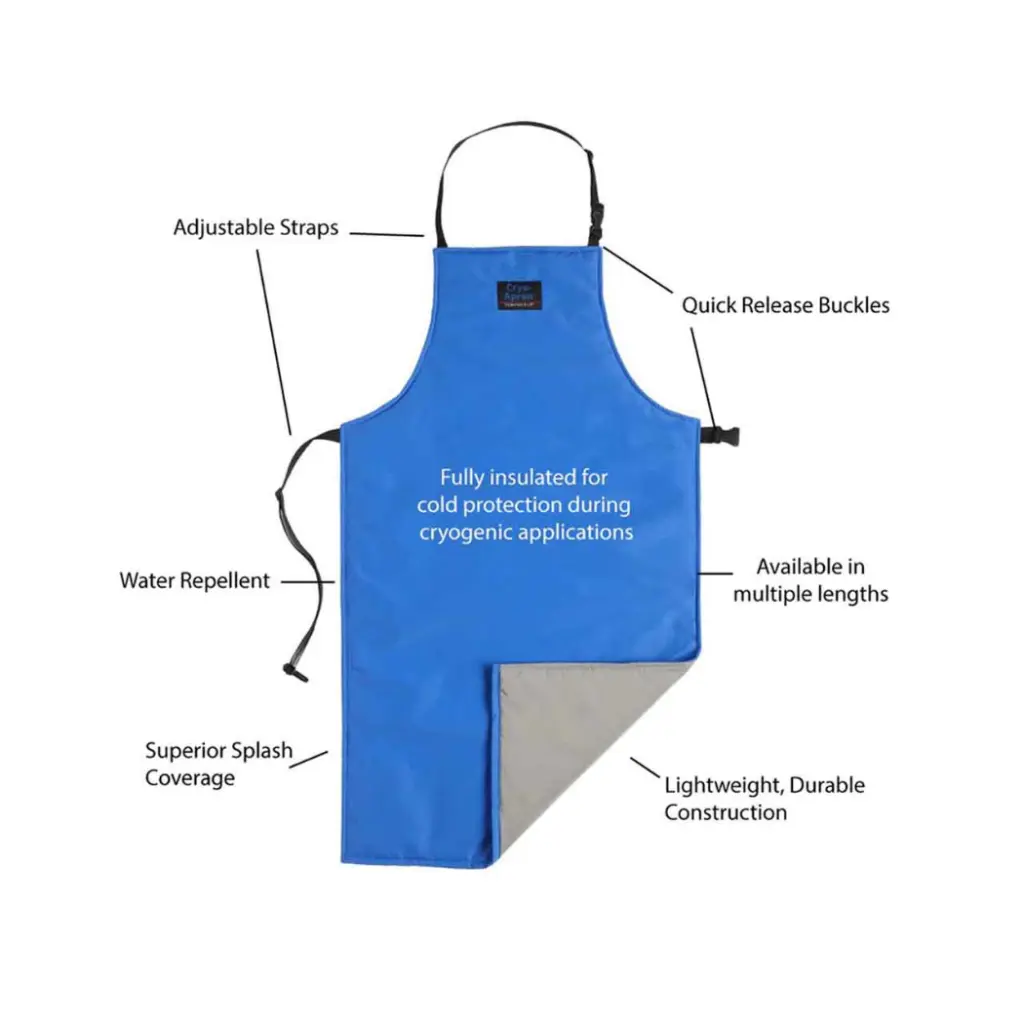
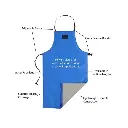
Waterproof nylon outer shell blocks cryogenic liquid splashes
The outer layer matters most when you're filling a dewar or transferring LN2
Quick-release buckles let you shed it fast if something goes wrong
An apron you can't remove quickly is a liability
Four lengths from 36" to 54" - wear the right size, not whatever fits
A poorly fitted apron leaves gaps exactly where you don't want them
Tempshield CRYO-APRON® at a glance
What is this product?
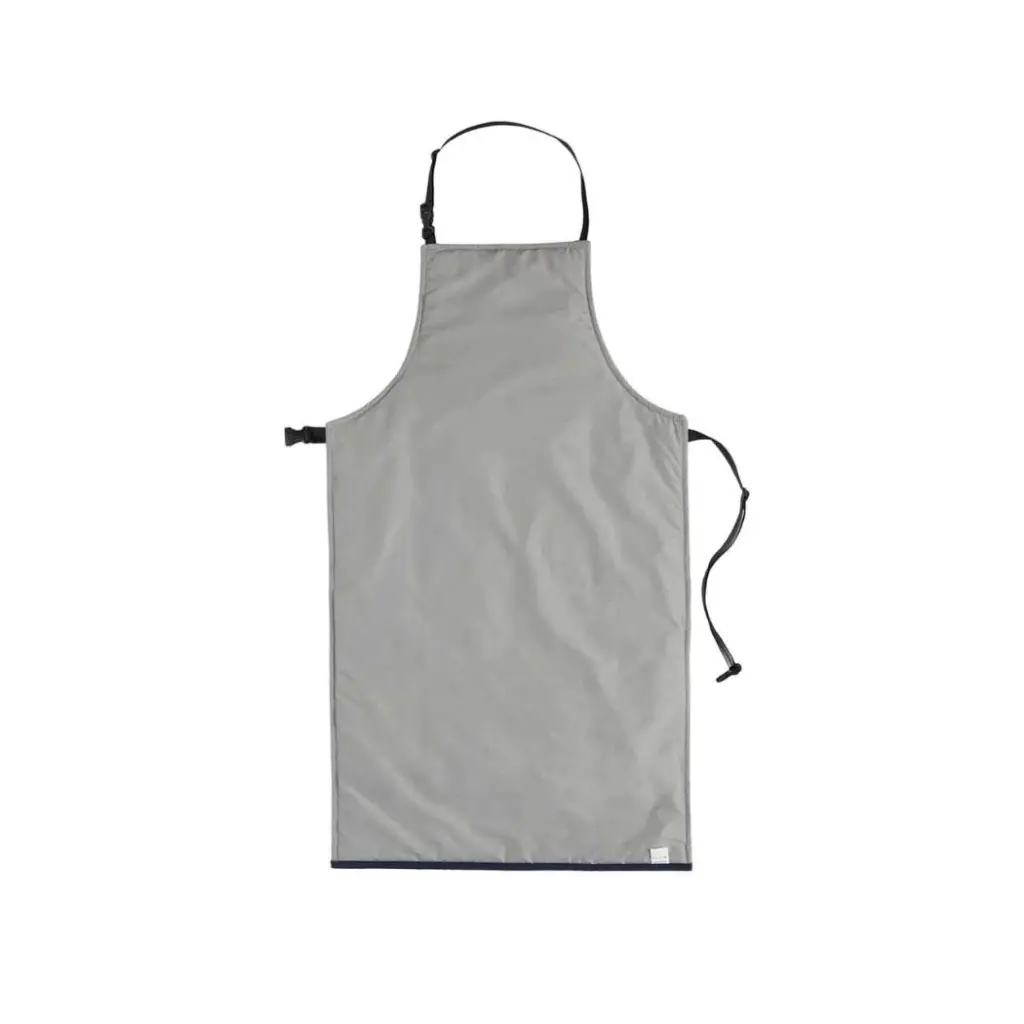
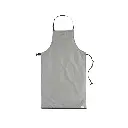
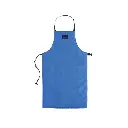
The Tempshield CRYO-APRON® is a multi-layer cryogenic apron that protects your torso and upper legs from cryogenic liquid splashes and contact cold down to -196°C (-320°F). The waterproof outer shell, thermal insulation layers, and adjustable fit system work together to provide CE Cat. III certified protection. Available in 36", 42", 48", and 54" lengths.
Who is it for?
Anyone regularly handling cryogenic liquids - liquid nitrogen, liquid argon, liquid helium, liquid CO₂ - in research labs, biobanks, cryogenic storage facilities, medical facilities, and industrial settings. Also relevant for lab managers and safety officers equipping new cryogenic stations or replacing worn PPE.
What does it do?
Shields your body from cryogenic splashes during liquid transfers, dewar filling, sample retrieval, and routine cryogenic liquid handling. Provides thermal protection from contact cold and reduces injury risk in the event of a spill or splash.
What are the benefits in your workplace?
Certified protection that meets EU safety standards. A properly sized apron closes the gap between your gloves and your lab coat. Quick-release buckles mean you can remove it in seconds if you need to. Breathable construction means you'll actually wear it. Tempshield is a brand with a genuine reputation in cryogenic PPE.
What problems does it solve?
Working with liquid nitrogen without adequate torso protection. A standard lab coat offers almost no real barrier against cryogenic liquid. Using an oversized or undersized apron that leaves your abdomen or upper legs exposed. Not having a certified piece of PPE to document for compliance purposes.
What are your next steps?
Measure your torso length and choose your size. Add to cart, or contact us for institutional or volume pricing.
Working with cryogenic liquids is one of the more genuinely hazardous routine tasks in a lab. Liquid nitrogen boils at -196°C and causes serious tissue damage on contact - and splashes happen. The CRYO-APRON® from Tempshield is the right tool for this job: certified protection, from a brand that specializes in exactly this type of PPE, at a price that doesn't require a capital equipment justification.
Suitable for...

Liquid nitrogen handling

Cryogenic sample storage

Biobanking and biorepositories

Industrial cryogenic operations
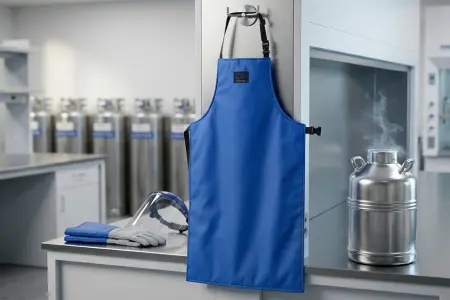
Why the Tempshield CRYO-APRON® is the right choice for cryogenic work
This is for labs that take their cryogenic hazard protocols seriously
Your biosafety committee and EHS officer don't care which brand of centrifuge you run. They do care whether your team is wearing appropriate PPE when handling LN2. The CRYO-APRON® gives you a certified answer to that question: CE Cat. III, which is the highest level of PPE certification under EU standards, reserved for hazards that can cause irreversible or fatal injury. That's not a marketing claim - it's the result of third-party testing against EN 511 (cold protection), EN 388 (mechanical resistance), and EN ISO 13688 (general protective clothing standards).
Why this cryo apron is worth your budget
- Certified to CE Cat. III. Not all cryogenic PPE is equal, and not all aprons carry meaningful certification. CE Cat. III is the classification for protective equipment used against risks that can cause death or serious and permanent damage to health. For cryogenic liquid handling, that classification is appropriate.
- Waterproof outer shell. The nylon outer layer is what stops a liquid nitrogen splash from reaching your clothing and skin. This is the most important layer in the construction for splash events.
- Multi-layer thermal insulation. Cryogenic exposure comes in two forms: splash and contact cold. The multi-layer construction addresses both, not just one.
- Quick-release buckles at neck and waist. If you take a direct hit, you need to get that apron off fast. Struggling with clasps when your clothing is cold-soaked is not a situation you want to be in.
- Adjustable straps for proper fit. A cryogenic apron that fits properly provides protection. One that doesn't fit properly just gives you a false sense of security.
- Made by Tempshield. Tempshield manufactures cryogenic PPE specifically - it's not a side product from a general safety equipment company. Their products are used in research labs, biobanks, and industrial cryogenic facilities worldwide.
Where this cryogenic apron is already being used
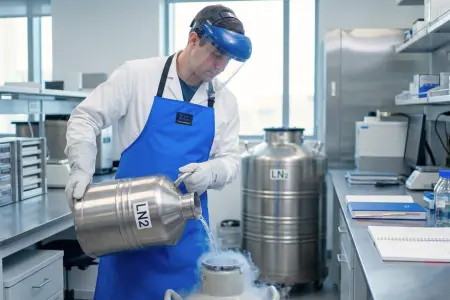
Research and university labs
Liquid nitrogen is ubiquitous in research - filling cryogenic storage vessels, snap-freezing samples, cooling reaction mixtures, operating cryostat equipment. The CRYO-APRON® is standard PPE for anyone at the bench doing this work regularly. A lab coat provides warmth; it doesn't provide cryogenic protection. The difference matters during a real splash event.
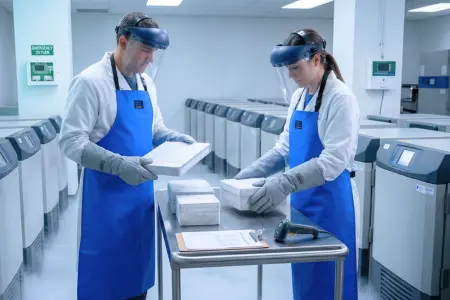
Biobanks and biorepositories
Sample retrieval from liquid nitrogen storage tanks means reaching into or over vessels where LN2 is present. This is exactly the scenario where the apron earns its place - protecting your torso and upper legs during the repeated dipping and retrieval that makes up daily work in a biorepository setting.
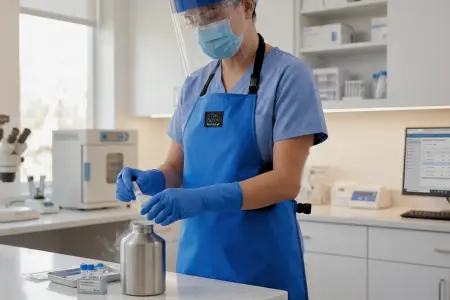
Medical and fertility clinics
IVF labs and tissue banks work with cryogenic storage as part of routine clinical operations. Staff handling cryopreserved embryos, sperm, oocytes, and tissue samples need appropriate PPE for the transfer and storage steps. The CRYO-APRON® provides the torso protection that a standard lab coat or surgical gown does not.
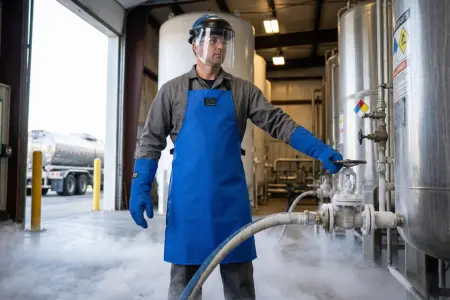
Industrial cryogenic operations
Industrial gas handling, cryogenic equipment maintenance, and LN2 distribution all involve larger volumes and potentially higher splash risks than a typical research lab. The CRYO-APRON®'s industrial-grade materials and certified protection make it appropriate for these higher-exposure environments.
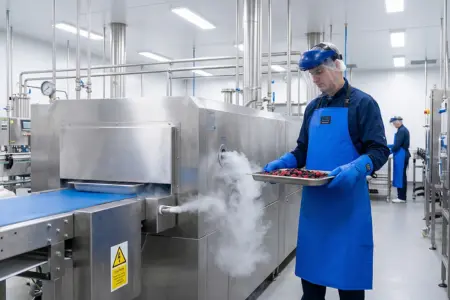
Food and beverage processing
Cryogenic freezing with liquid nitrogen is used in food processing for rapid product freezing and controlled atmosphere applications. Workers handling LN2 in these settings need certified cryogenic protection, not standard cold weather gear.
What makes the Tempshield CRYO-APRON® different from improvised alternatives
Let's be direct about what labs sometimes use instead of proper cryogenic PPE.
A standard lab coat
Made of cotton or polyester blends, neither of which provides meaningful thermal protection against cryogenic temperatures. Will absorb liquid nitrogen and hold it against your skin rather than shedding it. Not splash-resistant, not thermally protective.
A general purpose cold-weather apron
Cold weather gear is designed for ambient cold, not cryogenic temperatures (-196°C is a different category of hazard than -10°C). Certifications for general cold protection do not qualify equipment for cryogenic use.
Nothing
Common in busy labs where the "quick transfer" mentality skips the PPE step. The transfer takes 30 seconds. The injury takes longer to heal.
The CRYO-APRON® closes this gap. It's specifically designed for cryogenic environments, tested to those conditions, and certified by a recognized standard. It's not the most expensive cryo apron on the market and it's not trying to be. It does the job it's certified to do.
How to choose the right cryo apron size
1. The most important decision is length
A cryo apron protects what it covers. An apron that ends above your knees leaves your thighs and shins exposed to splash. An apron that covers your feet creates a tripping hazard. The four available lengths are designed to fit different height ranges - not to offer an arbitrary selection.
General guidance:
- 36" (91.4cm) - Suitable for shorter stature; covers torso to mid-thigh
- 42" (106.7cm) - Mid-range length; covers torso to lower thigh on average height
- 48" (121.9cm) - Extended coverage; suitable for taller users or applications requiring more leg protection
- 54" (137.2cm) - Maximum coverage; reaches to approximately knee level on taller individuals
When in doubt about sizing, choose longer rather than shorter. The quick-release buckles mean extra length doesn't impede removal. Insufficient length means real exposure.
2. Consider your task
For sample retrieval from cryogenic storage vessels - where you're bending forward and reaching down - longer coverage matters more. The 48" and 54" lengths provide coverage across the thigh and knee that protects against splashes that travel downward during retrieval.
For bench transfer work with smaller LN2 volumes, the 36" or 42" may be sufficient depending on your height.
3. Pair it with appropriate hand and arm protection
The CRYO-APRON® protects your torso and upper legs. For complete cryogenic protection, pair it with Tempshield cryogenic gloves. Your hands and forearms are closer to the liquid during most transfer tasks and need their own appropriate protection.
CRYO-APRON® product details
What the CE Cat. III certification means for your lab
CE Cat. III is the highest classification in the EU's PPE Regulation (EU) 2016/425. It applies to PPE designed to protect against risks that can cause death or serious, permanent damage to health - including thermal hazards from extreme temperatures.
To carry the CE Cat. III mark, PPE must pass testing by a notified body (an independent third-party testing organization). The tests are defined by the specific standards the equipment claims to meet.
For the CRYO-APRON®, those standards are:
EN 511
Cold protection standard. Tests thermal insulation against convective cold, contact cold, and water penetration. Relevant for cryogenic environments where contact with extreme cold surfaces or splashing cold liquids is possible.
EN 388
Mechanical risk protection. Tests resistance to abrasion, blade cuts, tearing, and puncture. Protects against incidental physical damage during handling tasks.
EN ISO 13688
General requirements for protective clothing. Covers design, construction, ergonomic properties, and marking of protective garments. Establishes baseline requirements that all other certifications build on.
For labs that document their PPE for EHS compliance or regulatory audits, certified PPE with documented standards is a cleaner answer than "we use this because it seems appropriate."
Cryo apron frequently asked questions
Product and purchasing questions
The CRYO-APRON® is available in four lengths: 36" (91.4cm), 42" (106.7cm), 48" (121.9cm), and 54" (137.2cm). Choose based on your height and the coverage you need for your tasks. For most average-height adults doing bench-level LN2 transfers, the 42" covers the critical torso and upper thigh area. For users doing retrieval from floor-level storage vessels, the 48" or 54" provides better protection of the lower thigh and knee during bending.
No. The CRYO-APRON® is specifically designed and tested for cryogenic environments - meaning temperatures down to -196°C. Standard cold-weather aprons are designed for ambient cold (0°C to -30°C range) and carry different certifications. Using general cold-weather PPE as a substitute for certified cryogenic protection is not appropriate for liquid nitrogen handling.
The CRYO-APRON® is rated for protection down to -196°C, which covers liquid nitrogen (-196°C) and liquid argon (-186°C). Liquid helium boils at -269°C, which is below the rated protection range. For liquid helium applications, consult Tempshield directly for appropriate PPE guidance.
Yes. Like most cryogenic PPE, it is intended for repeated use under normal operating conditions. Inspect it regularly for damage to the outer shell, insulation, and buckle function. Replace it if the waterproof outer layer is compromised, if the insulation is damaged, or if the buckles no longer function reliably.
The CRYO-APRON® weighs approximately 2.58 kg (5.7 lbs). This is consistent with the multi-layer construction required for thermal protection.
No. The CRYO-APRON® is not designed for immersion in cryogenic liquids. It protects against splashes and contact cold - not submersion. No PPE apron is rated for immersion in cryogenic liquids.
Safety and compliance questions
The CRYO-APRON® is CE Cat. III certified to EN 511 (cold protection), EN 388 (mechanical risk protection), and EN ISO 13688 (general protective clothing requirements). CE Cat. III is the highest EU classification, covering PPE for hazards that can cause irreversible injury or death.
The CE Cat. III certification and the associated EN standards provide documented, third-party verified protection ratings. For EHS purposes, certifications from recognized standards bodies are typically more defensible than uncertified PPE, even if the uncertified PPE appears similar. Consult your EHS officer for your institution's specific documentation requirements.
The CRYO-APRON® protects your torso and upper legs. Complete cryogenic PPE for LN2 handling should also include cryogenic gloves for hand and forearm protection, a face shield for eye and face protection, and closed-toe shoes or boots. Do not rely on the apron alone as your complete protection against cryogenic hazards.
Follow Tempshield's care instructions for the specific product. For cryogenic PPE generally, avoid machine washing with harsh detergents that can compromise the waterproofing of the outer shell. Surface cleaning and air drying is typically recommended. Maintaining the integrity of the waterproof outer layer is essential to the apron's protective function.
Cryogenic safety basics
Liquid nitrogen presents several distinct hazards. It causes immediate tissue damage (cryogenic burns) on contact, equivalent to severe thermal burns. It rapidly vaporizes and expands - one liter of liquid nitrogen produces approximately 700 liters of nitrogen gas, which can cause rapid oxygen displacement in enclosed spaces. Sealed containers can build pressure rapidly if they have inadequate venting. And because it's colorless and odorless as a gas, oxygen depletion from LN2 vaporization can occur without sensory warning.
EN 511 tests protective clothing against three types of cold: convective cold (cold air), contact cold (touching cold objects or liquids), and water penetration. Each is rated on a numeric scale. For cryogenic applications, contact cold performance is particularly relevant since direct contact with cryogenic liquids is the primary splash hazard.
A cryogenic apron protects your torso and upper legs from splashes and contact cold. Cryogenic gloves protect your hands and forearms - the parts of your body closest to the liquid during most transfer and handling tasks. Both are necessary for complete protection. They cover different body regions and are used together, not as alternatives to each other.
When a cryogenic liquid splash occurs, the liquid tends to travel downward and outward from the source. If you're leaning over a dewar or filling a container, the splash vector is typically toward your lower body. An apron that stops at the hip protects your torso but leaves your thighs and knees unprotected - which may be exactly where the splash travels. Appropriate length coverage depends on your work posture and the volumes you're handling.
View our 2025 Product Catalog
Get our complete and latest product portfolio for free.
Earn Rewards
Enjoy exclusive deals & discounts on our lab equipment & supplies.
Download Scilogex Literature
Find a collection of product manuals and brochure PDFs available for download.