



Why this product line has staying power at Scilogex
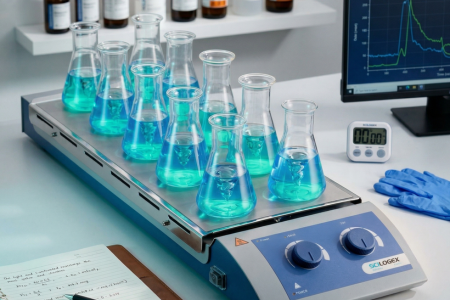
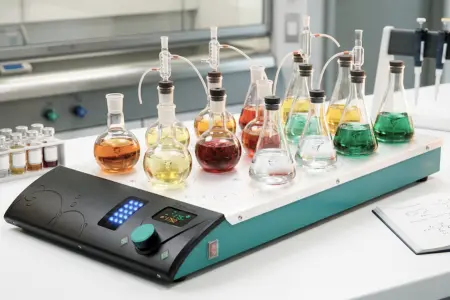
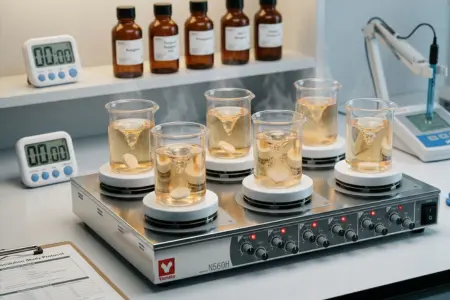
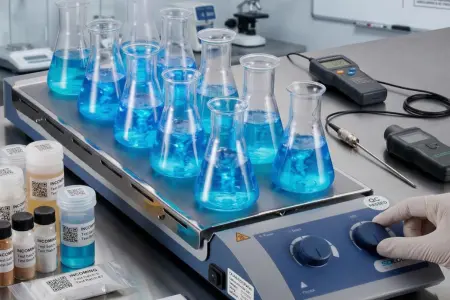
Multiposition hotplate stirrers and magnetic stirrers are among Scilogex's most reordered products. That pattern reflects how labs actually use them: the instruments arrive, get put to work, and keep running without demanding service calls or part replacements. There's no complex drive mechanism - the magnetic coupling is straightforward, the platforms are built to be wiped down and chemically resistant, and the digital models have minimal moving parts.
That durability profile matters when you're adding capacity to a lab that already has equipment. You're not replacing a broken instrument under pressure. You're choosing a parallel stirring platform that you expect to run daily for years.
Per-position cost: multiposition vs. individual stirrers
Running 10 separate single-position stirrers isn't just expensive upfront. It's 10 power cords, 10 control surfaces, 10 instruments to calibrate and maintain. A single 10-position multiposition magnetic stirrer handles the same workload, takes up less bench space, and costs far less than 10 individual units - even budget-tier individual units.
If you're equipping a new teaching lab, a screening bay, or a dissolution testing station, the per-position cost comparison with individual instruments almost always favors multiposition.
What colleagues typically say about this purchase
Lab managers running parallel dissolution testing cite the time savings of simultaneous runs as the primary reason for the purchase. Bench chemists running optimization screens point to improved data quality from matching run conditions. Teaching lab coordinators note the reduced maintenance overhead compared to managing a row of individual stirrers.
The common thread: the instrument does what it's supposed to do and keeps doing it. That's the expectation this collection is built to meet.


