

Skip to Content

Laboratory Centrifuges

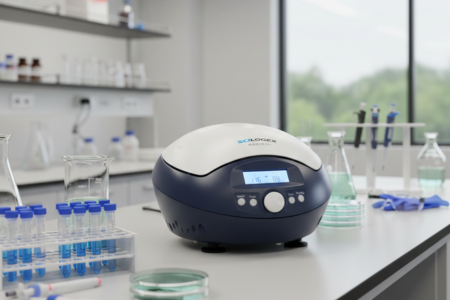
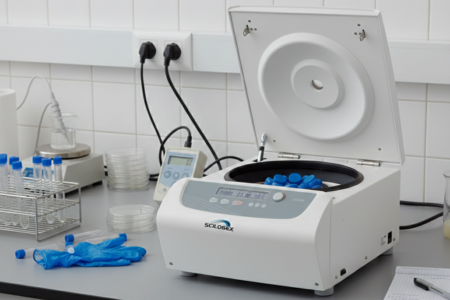
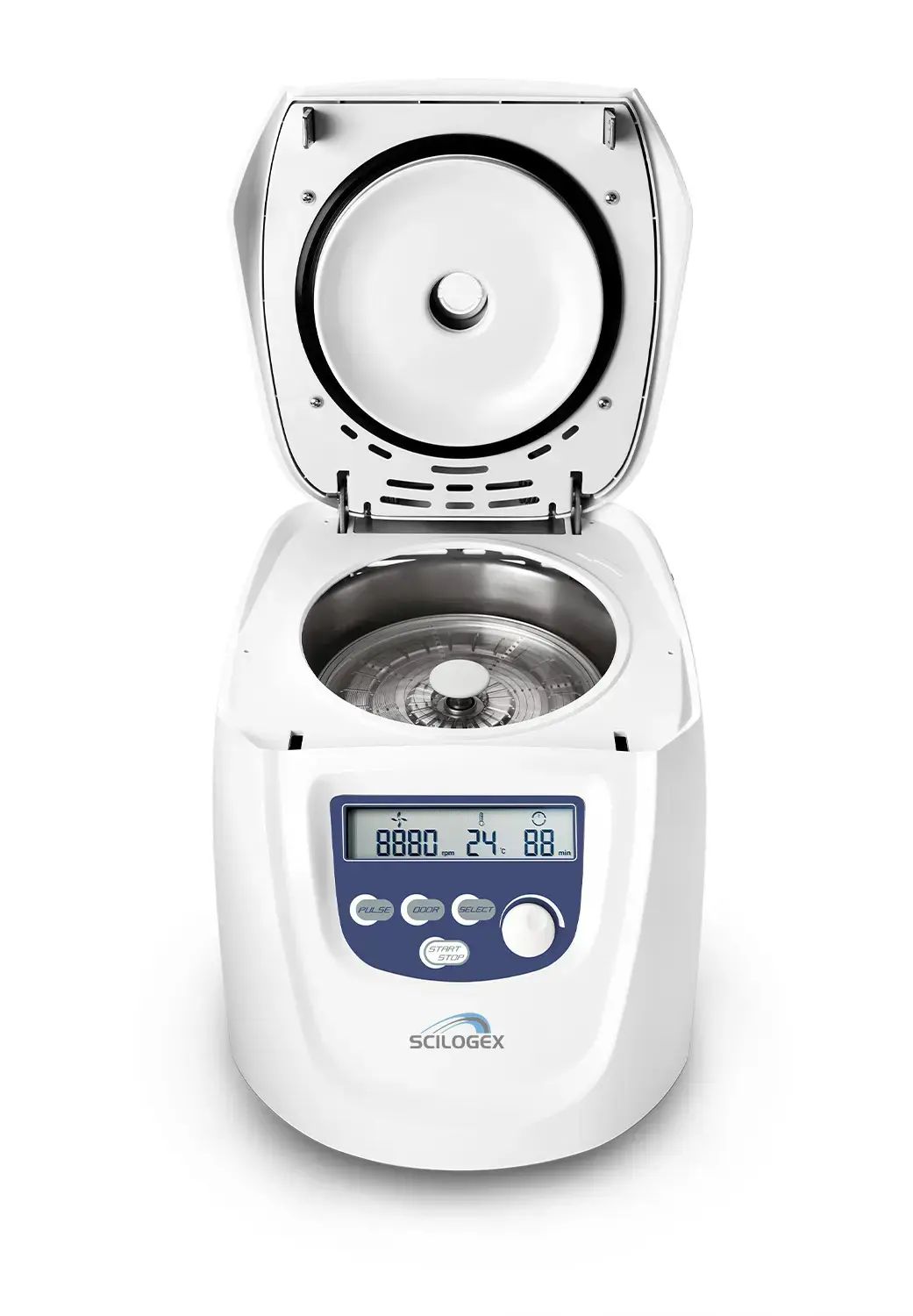
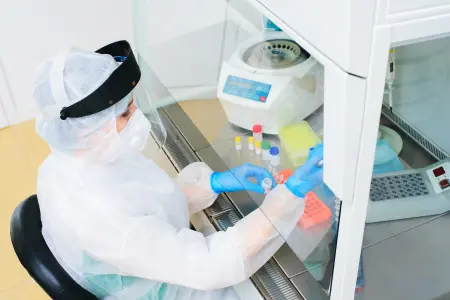
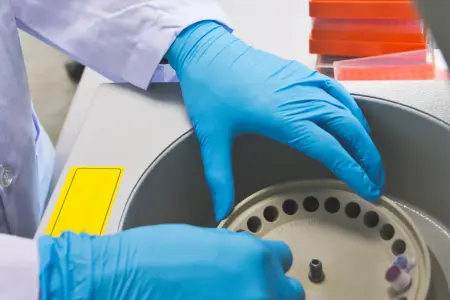
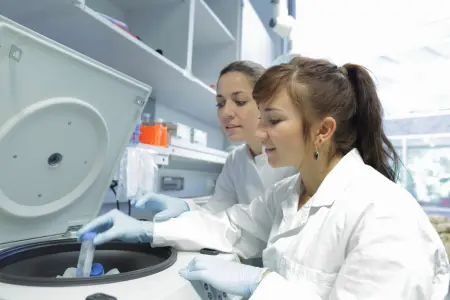
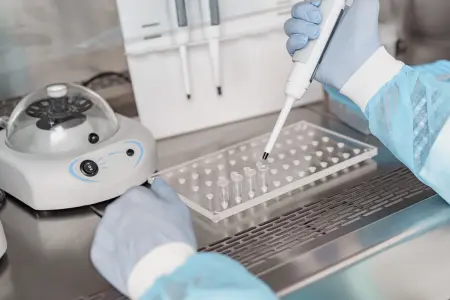
Your samples need reliable separation - not a premium brand markup. Scilogex benchtop centrifuges deliver the g-force your protocols require at prices that leave budget for the consumables that actually drive your research.

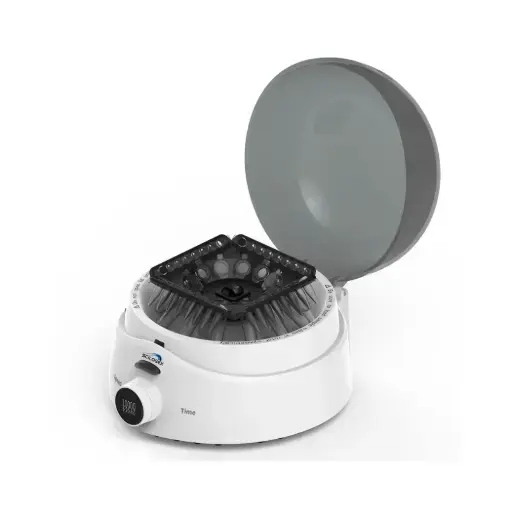
Mini centrifuges from $240 for quick spins and PCR prep

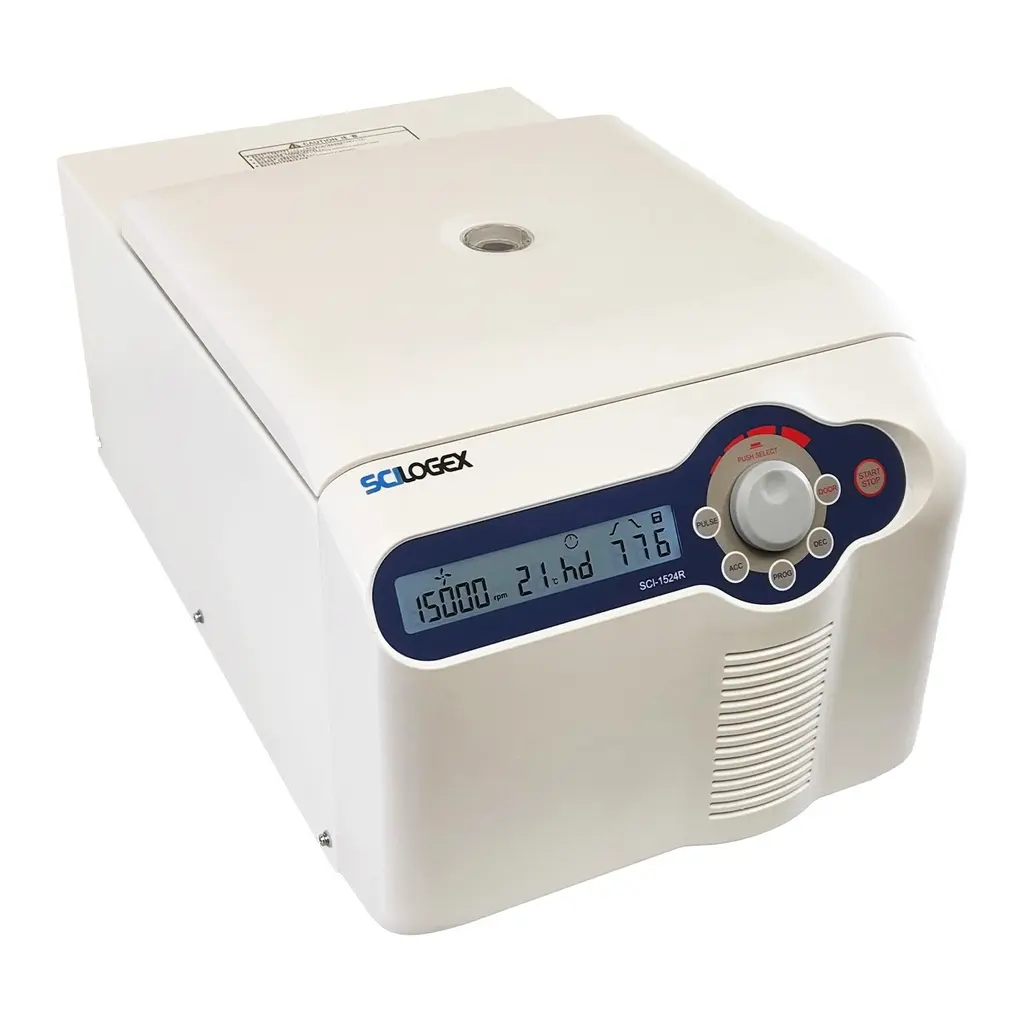
High-speed microcentrifuges up to 15,000 RPM for molecular biology

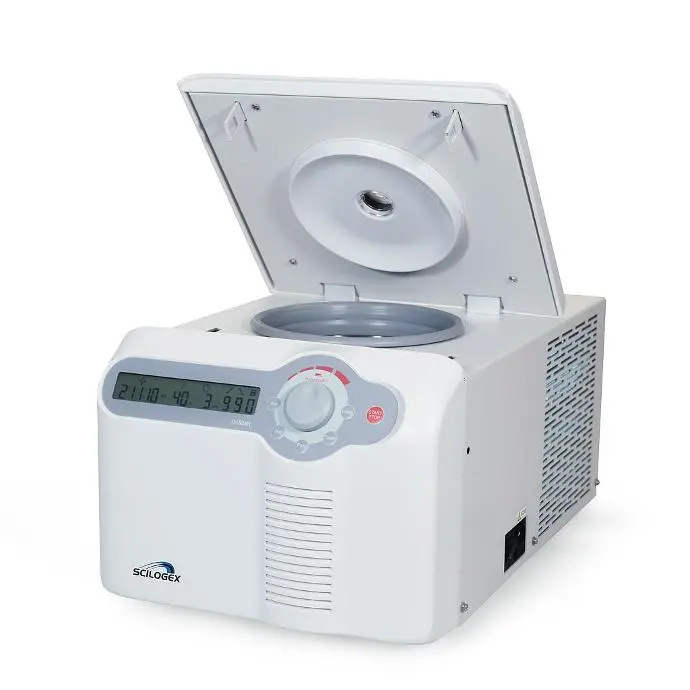
Refrigerated models with -20°C cooling for temperature-sensitive work

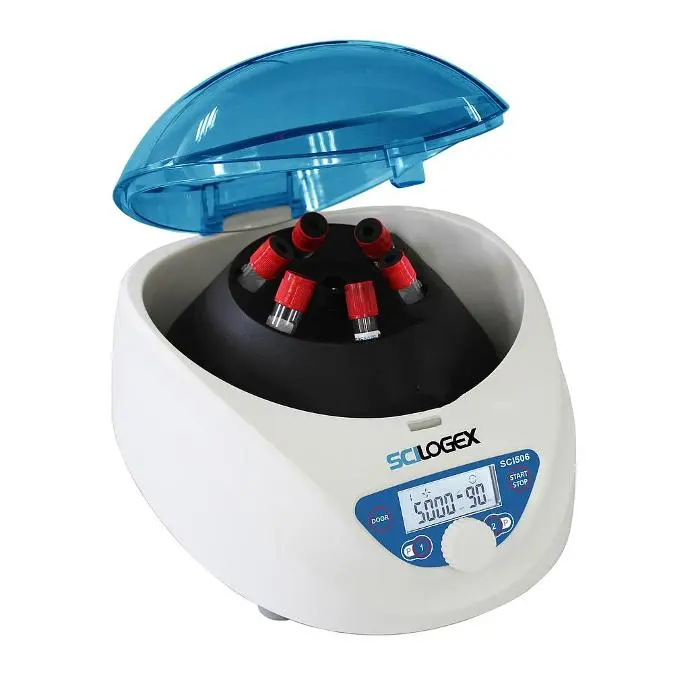
Clinical and multipurpose centrifuges for larger tube volumes

Products

Vacuum manifold options at a glance

Model Configuration Valve or stopcock Ports Price from
Space saving manifold Space saving manifold Single bank, compact J. Young PTFE, 0-10mm 3 / 5 / 8 $595
Single bank manifold Single bank manifold Single bank J. Young PTFE, 0-10mm 3 / 4 / 5 $668
Single bank with vacuum gauge port Single bank with vacuum gauge port Single bank J. Young PTFE, 0-10mm 3 / 4 / 5 $822
Dual bank manifold Dual bank manifold Dual bank (vacuum + inert gas) J. Young PTFE, 0-10mm 3 / 4 / 5 $1,358
Dual bank offset manifold Dual bank offset manifold Dual bank, front-control offset J. Young PTFE, 10mm 3 / 4 / 5 $1,364
Dual bank with glass stopcocks Dual bank with glass stopcocks Dual bank Glass stopcocks, 4mm 3 / 4 / 5 $1,751

A High Performance (HP) valve upgrade is available across the PTFE-valve models for more demanding applications. Every manifold usually ships in about two weeks.


What a vacuum manifold actually does 

A vacuum manifold (also called a vacuum gas manifold or, in its dual bank form, a Schlenk line) is a horizontal glass tube fitted with a row of valved ports. Each port connects to a flask or vessel. The manifold lets you apply vacuum to evacuate a vessel, then backfill it with nitrogen or argon, repeating the cycle until the atmosphere inside is clean.

That single capability is what makes air-free chemistry possible. Reagents that ignite, decompose, or quietly degrade on contact with air or water can be handled safely because they never see either one.

What you can run on a manifold

  • Evacuate and backfill. Cycle a flask between vacuum and inert gas to remove air and moisture before a reaction.
  • Hold an inert atmosphere. Keep a reaction under positive nitrogen or argon pressure for its full duration.
  • Dry samples. Pull residual solvent off a sample after it comes off the rotary evaporator.
  • Run several vessels at once. With multiple ports, you can manage parallel reactions or transfers on one line.

Having more than one manifold on the bench helps with scheduling and gives you a backup when one line is tied up. It does not remove the need to keep each line and trap clean between jobs.


Single bank vs dual bank vacuum manifolds

The configuration you need comes down to how you want to handle vacuum and inert gas.

Single bank manifolds

A single bank manifold is one tube with one row of valves. You connect it to either a vacuum source or an inert gas source and switch the whole line between tasks. It's the right call for straightforward evacuation and backfilling, sample drying, and labs that don't need to hold vacuum and gas live at the same time. Our single bank range starts at $595 for the space-saving design.

Dual bank manifolds (Schlenk lines)

A dual bank manifold runs two parallel tubes: one on vacuum, one on inert gas. Each port's valve lets you select vacuum or gas for that vessel independently, without touching the rest of the line. This is the classic Schlenk line setup, and it's what you want for demanding air-sensitive synthesis where you're cycling multiple flasks through evacuate-and-backfill steps and need both services available at once.

A compact note on bench space

If fume hood space is tight, the space saving manifold fits more ports into less width. It carries up to 8 ports in a 13mm main tube at 420mm wide, against the standard 16mm tube. The dual bank offset design stacks its two banks with front-facing controls, so the valves stay reachable even in a shallow hood


Why J. Young greaseless valves matter

Every manifold in this range uses J. Young high vacuum PTFE valves rather than greased ground-glass stopcocks (the glass stopcock dual bank model being the one exception, for labs that specifically want them).

Greaseless valves matter for a few concrete reasons:

  • No grease migration. Stopcock grease can creep into your line and contaminate sensitive reactions. PTFE valves with O-ring seals don't introduce grease at all.
  • They hold vacuum reliably. A PTFE valve against an O-ring gives a consistent high-vacuum seal that doesn't depend on a fresh coat of grease.
  • You rebuild instead of replace. O-rings and PTFE spindles are serviceable parts. When a seal wears, you replace a component rather than the whole valve.

The High Performance (HP) valve option goes further, with a reinforced sealing area and improved interchangeability for labs running harder duty cycles. It's available in both fine and fast thread.


Where these vacuum manifolds get used

Air-sensitive and organometallic synthesis

Grignard reagents, organolithiums, metal complexes, and other reagents that won't survive contact with air or water are made and handled under the inert atmosphere a manifold provides.


Catalysis research

Air-free catalyst preparation and screening rely on evacuate-and-backfill cycling to keep oxygen and moisture out of the system..


Materials and polymer chemistry

Controlled-atmosphere polymerizations and air-sensitive material prep use the manifold to hold a clean inert environment for the length of the reaction.


Inert atmosphere sample drying

Samples coming off a rotary evaporator get their last traces of solvent pulled off under vacuum on the manifold.


Teaching and shared synthesis labs

Greaseless valves and serviceable seals make these manifolds practical for departments where many hands use the same line and grease contamination is a recurring headache.


How to choose the right vacuum manifold model

Choose your end connections and valves

1. Decide single bank or dual bank

If you need vacuum and inert gas available on the same line at the same time, you want a dual bank (Schlenk line) model. If you're evacuating and backfilling or drying samples and can switch the whole line between services, a single bank model does the job for less.

2.  Count your ports

Ports run from 3 up to 8 depending on the model. Pick for the number of vessels you realistically run at once, plus a little headroom. More ports mean a wider manifold, so check your fume hood width.

3.  Choose your end connections and valves

Single bank and standard dual bank models use serrated end connections for tubing. The glass stopcock and offset dual bank models use B19 socket ends for cone adapters. If you want a vacuum gauge on the line, the single bank gauge-port model has it built in, and the standard dual bank can take an NW16 flange for one.


Full specification comparison

Model Banks Valve / stopcock Main tube OD End connections Ports Width Price from
Space saving Single J. Young PTFE, 0-10mm 13mm Serrated 3 / 5 / 8 225-420mm $595
Single bank Single J. Young PTFE, 0-10mm 16mm Serrated 3 / 4 / 5 300-500mm $668
Single bank, gauge port Single J. Young PTFE, 0-10mm 16mm Serrated 3 / 4 / 5 300-500mm $822
Dual bank Dual J. Young PTFE, 0-10mm 24mm Serrated 3 / 4 / 5 300-500mm $1,358
Dual bank offset Dual J. Young PTFE, 10mm (front control) 24mm B19 socket 3 / 4 / 5 300-500mm $1,364
Dual bank, glass stopcocks Dual Glass stopcocks, 4mm 24mm B19 socket 3 / 4 / 5 300-500mm $1,751

See the most popular model: dual bank manifold


How these compare to Chemglass, Sigma-Aldrich, and other brands

When you price a Schlenk line, you'll come across Chemglass Airfree, Sigma-Aldrich, and similar glassware lines. Here's where Scilogex fits.

The valve technology is the same idea

  • J. Young greaseless PTFE valves are the recognized standard for high-vacuum, contamination-free service. Our manifolds are built with them. You're not trading down on the part of the manifold that actually controls your atmosphere.

The cost structure is different.

  • Scilogex prices reliable, no-frills glassware below premium-branded lines. The budget you keep on the manifold goes to the rest of the bench: your glovebox consumables, your inert gas, your next instrument.

The serviceable design protects you long term.

  • Replaceable O-rings and PTFE spindles mean a worn seal is a cheap part, not a new manifold. That keeps your cost of ownership down over the years a manifold stays in service.

Where premium lines pull ahead is breadth of accessories and proprietary fittings. If your lab is standardized on a specific brand's adapter ecosystem, factor that in. For the manifold itself, the Scilogex range gives you the same air-free capability at a lower entry price.


What drives vacuum manifold pricing

A few factors explain the spread from $595 to $1,751 across this range. 

Single vs dual bank

  • A dual bank manifold is effectively two manifolds joined as one, with twice the valving. That's the single biggest driver of price between our single bank and Schlenk line models.

​Number of ports

  • More ports mean more valves and more glasswork. A 5-port manifold costs more than the 3-port version of the same model.

​Valve grade

  • The standard J. Young PTFE valve covers most work. The High Performance (HP) upgrade adds a reinforced seal for harder duty cycles at additional cost.

​Glass stopcocks vs PTFE valves

  • The glass stopcock dual bank model sits at the top of the range for labs that specifically want ground-glass stopcocks over PTFE valves.

Gauge ports and flanges

  • A built-in vacuum gauge port or an NW16 flange option adds capability, and a small amount to the price, versus the base model.

​Adapters

  • The glass stopcock and offset models don't include cone adapters in the base price (see Jya/1 and Jya/2). Budget for those if your setup needs them.

    Vacuum manifold and Schlenk line FAQs

A vacuum manifold lets you switch a flask between vacuum and inert gas without exposing its contents to air. That makes it the core tool for handling moisture- and oxygen-sensitive reagents, running air-free reactions, and drying samples under vacuum.  

A Schlenk line is a specific type of vacuum manifold: a dual bank design with one tube on vacuum and one on inert gas, so you can select either service for any port. Single bank manifolds connect to one source at a time. Every dual bank manifold in this range is a Schlenk line. 

Choose dual bank if you need vacuum and inert gas live on the same line at once, which is typical for air-sensitive synthesis. Choose single bank for evacuation and backfilling, sample drying, or any workflow where switching the whole line between services is fine  

Greaseless PTFE valves don't introduce stopcock grease into your line, which protects sensitive reactions from contamination. They also hold a consistent high-vacuum seal and use replaceable O-rings, so a worn seal is a serviceable part rather than a reason to replace the valve. We do offer a glass stopcock dual bank model for labs that prefer ground-glass stopcocks

Pick for the number of vessels you run at the same time, with a little headroom. Our manifolds range from 3 to 8 ports. Remember that more ports mean a wider manifold, so confirm it fits your fume hood  

Yes. The single bank gauge-port model has a vacuum gauge port built in. The standard dual bank manifold can take an NW16 flange to connect a gauge (look for the -NW16 product codes).  

One bank connects to a vacuum pump, usually through a cold trap that keeps solvent vapors out of the pump. The inert gas bank connects to a nitrogen or argon supply, typically vented through an oil bubbler to maintain a slight positive pressure. The manifold is the control point between your vessels and those two services

The HP valve is an upgraded J. Young PTFE valve with a more robust design, a reinforced sealing area, and improved interchangeability, intended for more demanding applications. It's available in both fine and fast thread across the PTFE-valve models

10x10, 30L, up to 500°C. The Hotplate Stirrer you need.

Learn More

Save time, Save money, and save valuable chemicals. It's genie-us.

Shop Now

Trade in your old pipettes today for a major discount toward the new Superpette.

Tell us what you're turning in

Do you have any product inquiries or other concerns?

Let us know or ask anything by filling out the form below. One of our laboratory equipment experts will get back to you within 24 hours

For more information please
call +1 (860) 436-9221
or email us at [email protected]


Why Buy From SCILOGEX?


Scilogex only guarantees quality and excellence. Serving laboratories for all areas of research for many years already, we offer a wide range of innovative benchtop equipment designed to meet requirements and budget of virtually any laboratory. Operate at your highest level of efficiency with our advanced line of liquid handling and laboratory products manufactured by our partners in ISO90001 facilities and are UL approved with cTUVus and cSAus certifications.

Always customer-focused, we make sure our patrons are given the best deals, warranties, and customer service in the market. Trust our laboratory experts to provide not just exceptional pre-purchase support but also unparalleled product recommendations.

View our 2025 Product Catalog

Get our complete and latest product portfolio for free.

View Scilogex Catalog Now

Earn Rewards

Enjoy exclusive deals & discounts on our lab equipment & supplies.

Start Earning Points​​​

Download Scilogex Literature

Find a collection of product manuals and brochure PDFs available for download.

Browse Here